One of the most common questions we get from homeowners across Central Minnesota and the Twin Cities is simple: “When should I treat my ash tree for emerald ash borer?” It’s a great question, because with EAB treatment, timing is not a detail — it’s the difference between strong protection and a wasted application.
This guide walks through the treatment calendar for Minnesota, explains the science behind the window, and helps you plan so your ash trees are protected before the beetle’s most damaging season.
The Short Answer: May Through Late September
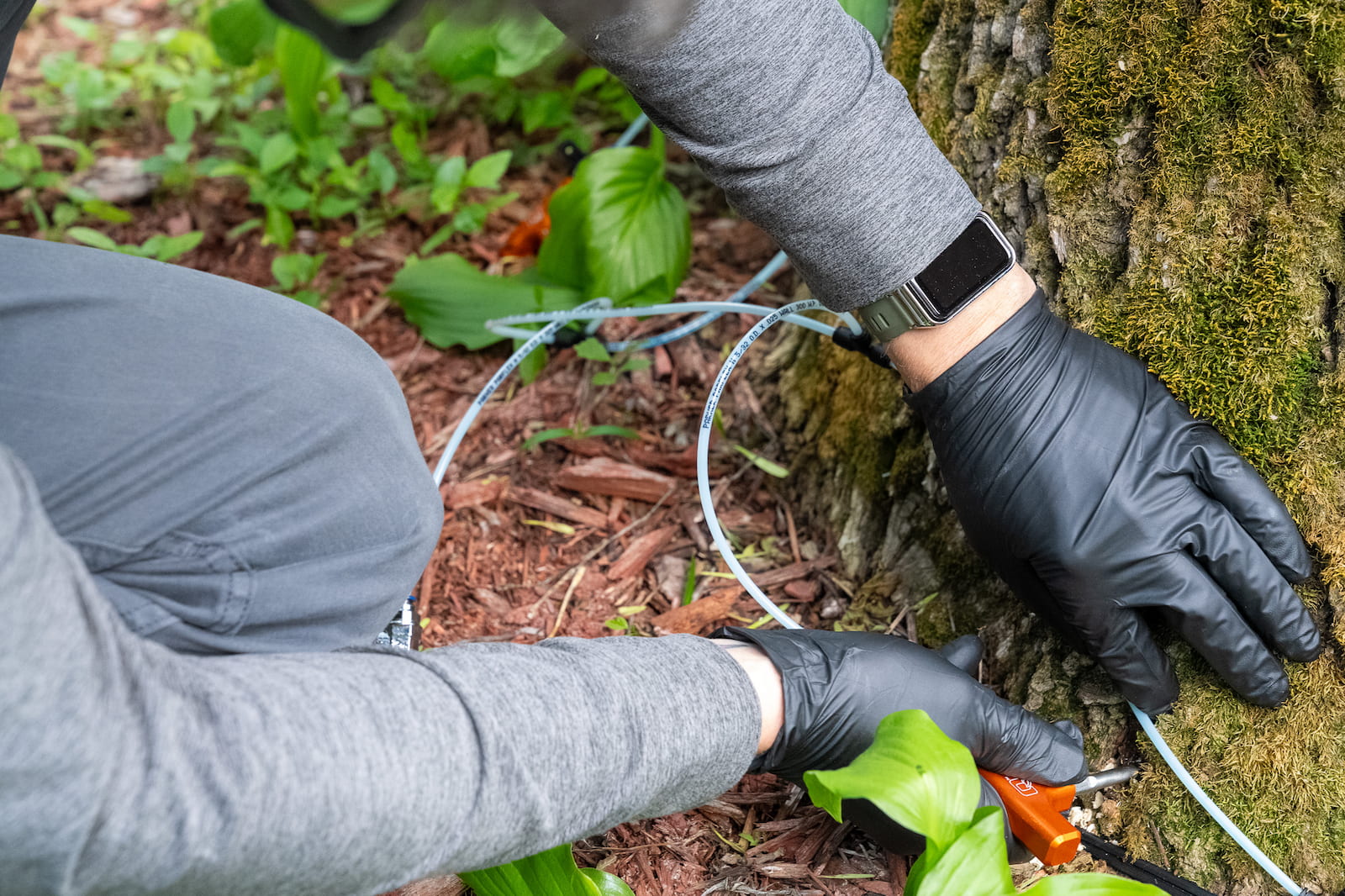
For trunk injection — the gold-standard EAB treatment — the University of Minnesota Extension recommends treating from May through late September, when the tree’s canopy is fully leafed out and actively moving water and nutrients. During this window, the tree pulls the insecticide up through its vascular system and distributes it efficiently to the canopy, where EAB larvae do their damage.
The biology is straightforward: a trunk injection relies on the tree’s own “plumbing” to carry the product. When the leaves are out and the tree is transpiring, uptake is fast and complete. In late fall and winter, when the tree is dormant and the sap isn’t moving, an injection simply won’t distribute properly.
The Minnesota EAB Treatment Calendar
| Season | Timing | What to Do |
|---|---|---|
| Early Spring | March – April | Schedule your assessment and treatment now. Trees are not yet ready to inject, but booking early secures a spot in the spring rush. |
| Late Spring | May – early June | Prime treatment window. Full canopy, strong uptake. The best time to protect a healthy ash tree. |
| Summer | June – August | Excellent treatment window continues. Ideal for both preventative and early-infestation treatment. |
| Early Fall | September | Still effective, though uptake slows as the season winds down. Good for trees treated late. |
| Late Fall / Winter | October – February | Not a treatment window. Plan, monitor, and budget for spring. |
How Often Do You Need to Re-Treat?
A professional trunk injection of emamectin benzoate protects an ash tree for two to three years per application. Most healthy trees in our area are best served by a consistent two-year cycle, which keeps protection continuous and never lets the tree’s defenses lapse during a high-pressure EAB year. We track these cycles for our clients so retreatment is scheduled before protection runs out — it’s part of every EAB treatment plan we build.
Should You Treat It Yourself, or Hire a Professional?
Minnesota homeowners can legally apply some over-the-counter soil-drench products, but the state’s homeowner insecticide guidance is clear that do-it-yourself treatment should be limited to trees smaller than 15 inches in diameter at breast height (DBH). To estimate DBH, measure the trunk’s circumference at 4.5 feet above the ground and divide by three.
For anything larger — and for the most effective product, emamectin benzoate, which is restricted to licensed applicators — trunk injection by a certified professional is the right call. It delivers far better control than soil drenches, uses less product, and keeps the insecticide inside the tree, away from pollinators and soil. You can read more about why credentials matter for tree care on our blog.
Plan Around Your City’s Peak Season
Because every ash owner wants treatment in the same May–September window, the calendar fills quickly — especially in heavily wooded communities. If you’re in one of these areas, reach out in late winter or early spring to lock in your timing:
- EAB treatment in St. Cloud
- EAB treatment in Maple Grove
- EAB treatment in Monticello & Elk River
- EAB treatment in Alexandria
Not sure if your tree is a candidate? Our tree inspections and risk assessments start with an honest evaluation of whether treatment makes sense for each tree.
Frequently Asked Questions
What is the best month to treat ash trees for EAB in Minnesota?
May and June are ideal. The canopy is fully leafed out, the tree is actively transpiring, and uptake of the trunk-injected insecticide is fast and complete. Treatment remains effective through late September.
Can ash trees be treated in fall or winter?
Early fall (September) treatments can still be effective, though uptake slows as the tree prepares for dormancy. Late fall and winter are not treatment windows — the tree is dormant and won't distribute the product. Use that time to plan and budget for a spring treatment.
How often do I need to re-treat my ash tree?
A professional emamectin benzoate trunk injection lasts two to three years. We recommend a two-year cycle for continuous protection in areas with active EAB pressure, and we schedule retreatment before the previous application wears off.
How do I measure my tree's diameter at breast height (DBH)?
Measure the circumference of the trunk at 4.5 feet above the ground, then divide by three for an approximate DBH. Trees larger than about 15 inches DBH are best treated by a professional with a trunk injection rather than a do-it-yourself soil drench.
Need Expert Help?
Get a free consultation from our ISA Certified Arborist. Serving St. Cloud, the I-94 corridor, and the Twin Cities.
Request a Consultation